Viktor Otto · 28 September 2026
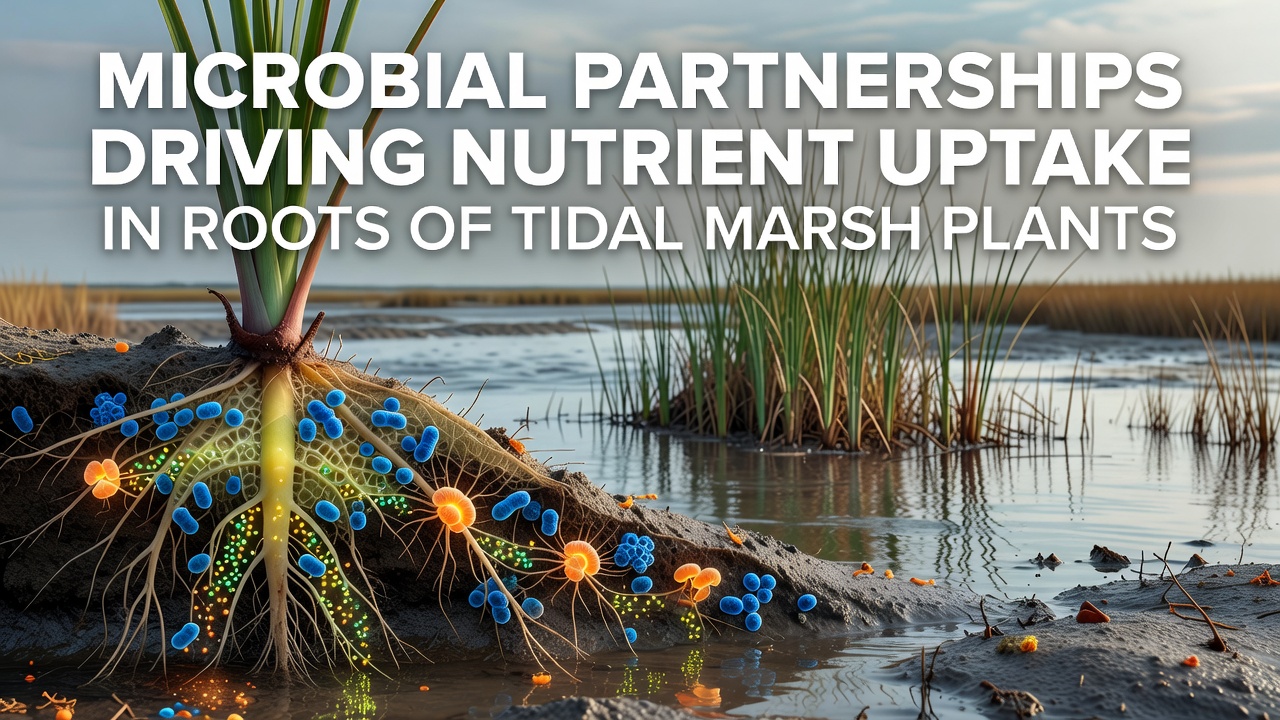
Microbial Partnerships Driving Nutrient Uptake in Roots of Tidal Marsh Plants
Tidal marsh plants face constant challenges from waterlogged soils, high salinity, and limited oxygen availability yet they thrive through intricate relationships with soil microbes that enhance nutrient acquisition in these demanding environments, and researchers have documented how bacteria and fungi colonize root zones to facilitate uptake of nitrogen, phosphorus, and other essential elements while plants supply the microbes with carbon compounds in return.
Root Zone Conditions in Coastal Wetlands
Coastal wetlands experience tidal flooding that creates anaerobic conditions where oxygen diffuses slowly through water-filled pores, and this situation restricts plant respiration while slowing decomposition rates that would otherwise release nutrients from organic matter, but microbial communities adapt by using alternative electron acceptors such as sulfate or nitrate to continue metabolic processes that indirectly support plant nutrition.
Salinity levels fluctuate with each tide and can inhibit root membrane function or cause ion toxicity, whereas certain microbes produce osmolytes or exopolysaccharides that help shield root tissues and maintain hydration, and studies from multiple regions show these protective effects allow plants like Spartina and Phragmites to persist across salinity gradients.
Key Microbial Groups and Their Functions
Arbuscular mycorrhizal fungi form extensive hyphal networks that extend beyond the root depletion zone and transport phosphorus from distant soil particles back to the plant in exchange for sugars, and field observations indicate colonization rates often exceed 70 percent in well-established marsh stands during peak growing seasons.
Nitrogen-fixing bacteria including species of Rhizobium and Azospirillum convert atmospheric nitrogen into ammonia within root nodules or associative biofilms, and this process supplies a significant fraction of the nitrogen required by marsh vegetation where tidal flushing removes much of the available nitrate, while data from long-term monitoring sites reveal seasonal peaks in fixation activity that align with plant demand.
Phosphate-solubilizing bacteria release organic acids and phosphatases that convert insoluble mineral phosphorus into plant-available forms, and combined with mycorrhizal transport these microbes increase overall phosphorus recovery efficiency in sediments that would otherwise bind the nutrient tightly under anoxic conditions.
Mechanisms of Nutrient Exchange
Root exudates containing sugars, amino acids, and organic acids stimulate microbial growth in the rhizosphere, and this selective enrichment favors strains that reciprocate by improving nutrient solubility or protecting against pathogens, while isotopic tracer experiments demonstrate rapid transfer of labeled carbon from shoots to microbes and labeled nitrogen or phosphorus back into plant biomass within days.
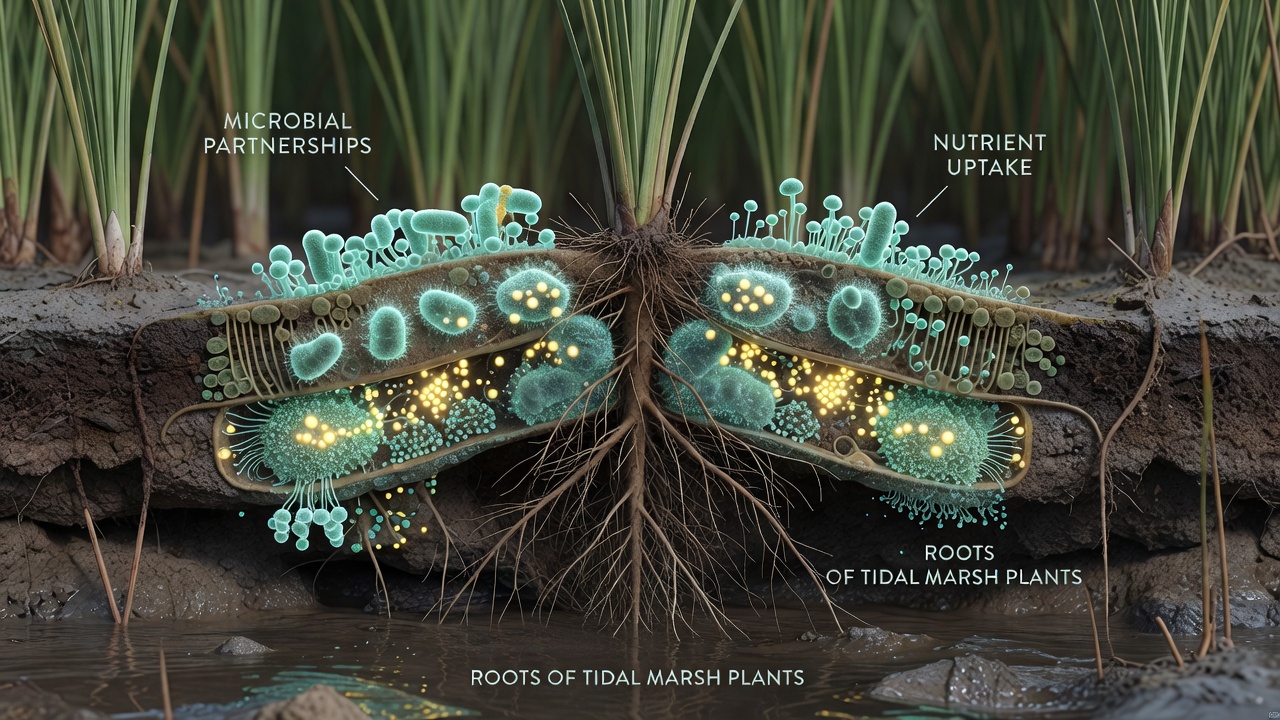
Signaling molecules such as strigolactones from plants and mycorrhizal factors from fungi coordinate colonization and arbuscule formation inside cortical cells, and once established the interface allows direct nutrient handoff across specialized membranes that minimize leakage into surrounding soil water, and similar chemical dialogues occur with endophytic bacteria that reside inside root tissues.
Under flooded conditions some microbes produce siderophores that chelate iron and other micronutrients, thereby preventing deficiency symptoms that would otherwise limit photosynthesis and growth, and greenhouse trials with inoculated versus sterile plants consistently show higher chlorophyll content and biomass when these partnerships remain intact.
Environmental Influences and Seasonal Patterns
Temperature rises accelerate microbial metabolism and enzyme activity, yet extreme heat combined with drought can reduce colonization, and monitoring programs along the Atlantic coast have recorded shifts in community composition that correspond with changes in pore-water chemistry during summer months, while cooler periods slow activity but maintain dormant propagules ready for reactivation.
Sea-level rise alters flooding frequency and duration, which in turn modifies oxygen penetration and microbial respiration pathways, and models project continued adjustments in partnership strength as marshes migrate landward or accrete vertically, with evidence from sediment cores suggesting historical resilience through microbial adaptation over centuries.
Research Developments Through 2026
Long-term experiments initiated at several university field stations have tracked microbial gene expression under controlled tidal regimes, and results published in 2025 highlight upregulated transporters for ammonium and phosphate during periods of high plant demand, and ongoing work scheduled for completion in September 2026 aims to quantify how restored marshes recruit beneficial microbes compared with reference sites.
According to reports from the U.S. Geological Survey wetland monitoring networks, microbial biomass carbon in root zones correlates strongly with above-ground productivity across diverse salinity classes, while parallel investigations by Australian coastal research groups have identified similar patterns in temperate and subtropical estuaries that support consistent nutrient delivery mechanisms despite differing plant species.
Conclusion
Microbial partnerships in tidal marsh roots represent a dynamic system where nutrient uptake depends on reciprocal exchanges that respond to tidal cycles, salinity, and temperature, and continued observation through established monitoring frameworks will clarify how these associations contribute to marsh stability and productivity under changing coastal conditions.